
When managing educational facilities, commercial flooring is one of the most critical infrastructure investments you can make. K-12 spaces endure continuous foot traffic, heavy furniture movement, cleaning chemicals, and daily spills. Choosing the wrong material leads to high maintenance costs, safety hazards, and premature replacement.
Selecting the best flooring for elementary, middle, and high schools requires balancing long-term lifecycle costs, custodial maintenance requirements, and acoustic comfort.
Strategic School Flooring Selection by Facility Zone
No single flooring material fits every area of an educational building. High-performance facility management matches the functional demands of each school zone with the appropriate commercial flooring material.
| School Area / Zone | Recommended Commercial Flooring | Key Performance Benefit |
| High-Traffic Corridors & Classrooms | Luxury Vinyl Tile (LVT) | High scuff resistance, low maintenance, realistic aesthetics |
| Budget-Conscious Classrooms | Vinyl Composition Tile (VCT) | Low initial material cost, easily patchable |
| Science Labs & Art Rooms | Resilient Sheet Vinyl | Seamless installation, chemical and stain resistance |
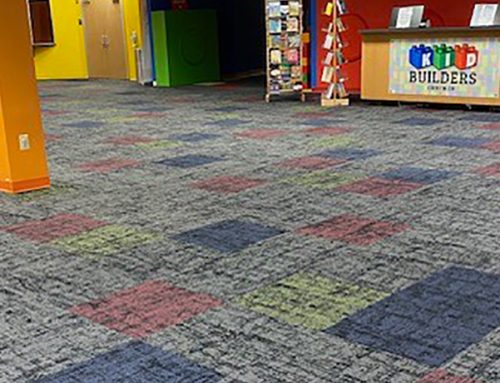
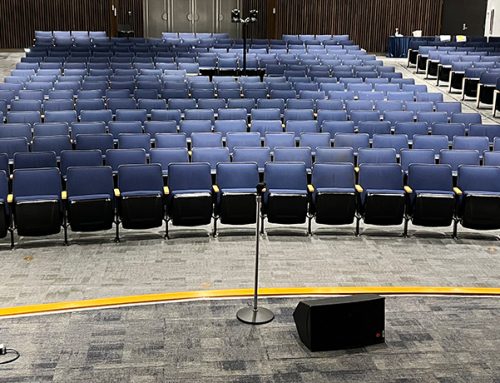
| Libraries & Media Centers | Modular Carpet Tile | Superior acoustic dampening, easy spot replacement |
| Eco-Conscious Classrooms & Foyers | Sustainable Linoleum | Renewable materials, natural antimicrobial properties |
| Gymnasiums & Weight Rooms | Rubber Sports Flooring | High shock absorption, slip-resistant surface |
| Cafeterias & Service Areas | Resilient Rubber Tile | Heavy load capacity, dent and abrasion resistance |
Top 7 Commercial Flooring Materials for K-12 Educational Facilities

1. Luxury Vinyl Tile (LVT) for Classrooms and Corridors
Luxury Vinyl Tile (LVT) is a leading choice for modern school renovations and new construction. LVT provides realistic wood, stone, or concrete designs without the costly maintenance required for natural surfaces.
2. Resilient Sheet Vinyl for Science Labs and Clinics
Standard flooring tiles create seams where chemical spills or moisture can penetrate into the subfloor. Resilient sheet vinyl creates a seamless surface that resists acids, solvents, and dyes used in biology and chemistry labs. Its smooth finish allows for quick sanitation in school nurse offices and art classrooms.
3. Modular Carpet Tile for Noise Reduction in Libraries
Uncontrolled noise in educational environments distracts students and creates teacher vocal strain. Modular carpet tiles absorb ambient sound, supporting quiet study spaces in school media centers and libraries. Unlike broadloom carpet, modular tiles allow facility teams to replace single stained or damaged tiles without replacing entire rooms.
4. Sustainable Linoleum for Green Building Initiatives
For school districts focused on sustainability and LEED certification, natural linoleum offers an eco-friendly flooring solution. Manufactured from renewable materials such as linseed oil, wood flour, and cork dust, linoleum is biodegradable and possesses natural antimicrobial properties that promote healthier indoor air quality.
5. Rubber Sports Flooring for Gymnasiums and Active Spaces
High-impact activity spaces demand athletic safety and traction. Commercial rubber sports flooring provides shock absorption in school gymnasiums and fitness rooms, reducing impact injuries during sports and physical education classes.
6. Resilient Rubber Tile for High-Impact Cafeterias
School cafeterias experience heavy equipment loads from rolling lunch tables, service carts, and continuous student traffic. Resilient rubber tiles withstand heavy point loads without denting or scuffing, maintaining structural integrity over decades of daily use.
7. Vinyl Composition Tile (VCT) for Cost-Effective Coverage
For school districts working with strict upfront budget constraints, Vinyl Composition Tile (VCT) remains a practical traditional option. While it requires periodic waxing and stripping, VCT offers a low initial material cost and simple spot-repair capabilities.
Essential Evaluation Criteria for School Facility Flooring
Before specifying commercial flooring products for an educational renovation or construction project, review these key operational factors:

Foot Traffic and Abrasion Levels
Identify primary traffic arteries versus secondary spaces. Heavy-traffic entryways and main corridors require higher mil wear layers or thick rubber surfaces.
Custodial Maintenance and Cleaning Realities
Evaluate your facility team’s labor capacity. Transitioning from traditional VCT to low-maintenance options like LVT or linoleum eliminates regular stripping and waxing, significantly reducing lifetime labor costs.
Acoustic Comfort and Sound Transmission
Select sound-absorbing materials like commercial carpet tile or rubber backing in spaces dedicated to reading, exams, and quiet instruction.
Total Lifecycle Cost (TLC)
Looking beyond initial price per square foot reveals true flooring value. Investing in low-maintenance, highly durable flooring materials frequently saves school districts tens of
thousands of dollars in routine labor and early replacement expenses over a 15- to 20-year cycle.
Partner with the DC Metro Area’s Trusted Commercial Flooring Experts
For over 40 years, Eagle Mat & Floor Products has served as a leading commercial flooring contractor across Washington, D.C., Maryland, and Northern Virginia. As a locally owned, family-operated business, our Commercial Flooring Division specializes in renovation, retrofit, and new construction projects for K-12 schools, higher education facilities, government buildings, and corporate offices.
Our decades of local experience reflect our commitment to superior craftsmanship, durable flooring solutions, and long-term client satisfaction.
Planning an upcoming educational flooring retrofit or facility upgrade? Contact the Eagle Mat commercial flooring team today to discuss your project requirements or explore our project portfolio to see our work in action.